

Ray — The Expansion Joints Blog

Archive

Author Archive

Dye Penetrant Testing Before and After Forming The Bellows

September 6th, 2011 Ray Comments off

We perform dye penetrant testing on all bellows longitudinal seam welds before and after forming the bellows. The test is performed to insure there are no weld defects such as surface cracking or weld discontinuities. The weld surface is thoroughly cleaned and a red penetrant dye is applied to the surface of the weld and allowed to soak for a period of time. The dye is then removed and a white powder is sprayed on the weld surface that performs a blotting action. An indication of the dye with a white background characterizes the weld surface discontinuities of the bellows longitudinal seam weld. This testing before and after the bellows forming process ensures a sound quality bellows seam weld.

Procedure for Dye Penetrant Testing

Procedure for Dye Penetrant Testing

Examples of Dye Penetrant Testing

Examples of Dye Penetrant Testing

Webinar Giveaway: PT&P Nalgene Water Bottle

August 22nd, 2011 Ray Comments off

If you would like a chance to win, simply attend one of our Webinars. If you want more chances to win or even win more than once, attend as many Webinars as we offer.

Register for the next Webinar

Webinar Giveaway: PT&P Nalgene Water Bottle

  • During the live presentation, attendees will be selected at random to receive a free PT&P Nalgene Water Bottle.
  • Open to U.S. and Canada Shipping only. Must be present the entire length of the Webinar to be eligible.
  • To receive the prize, you must be able to provide a valid mailing address within 24 hours after your name is announced.
  • Webinars are approved for 1 PDH credit hour for Texas Professional Engineers. After attending the live Webinar, email your request to enews@pipingtech.com.

Tied Universal Expansion Joints Designed for a Power Generation Plant in Texas

August 22nd, 2011 Ray Comments off

Tied Universal Expansion Joints

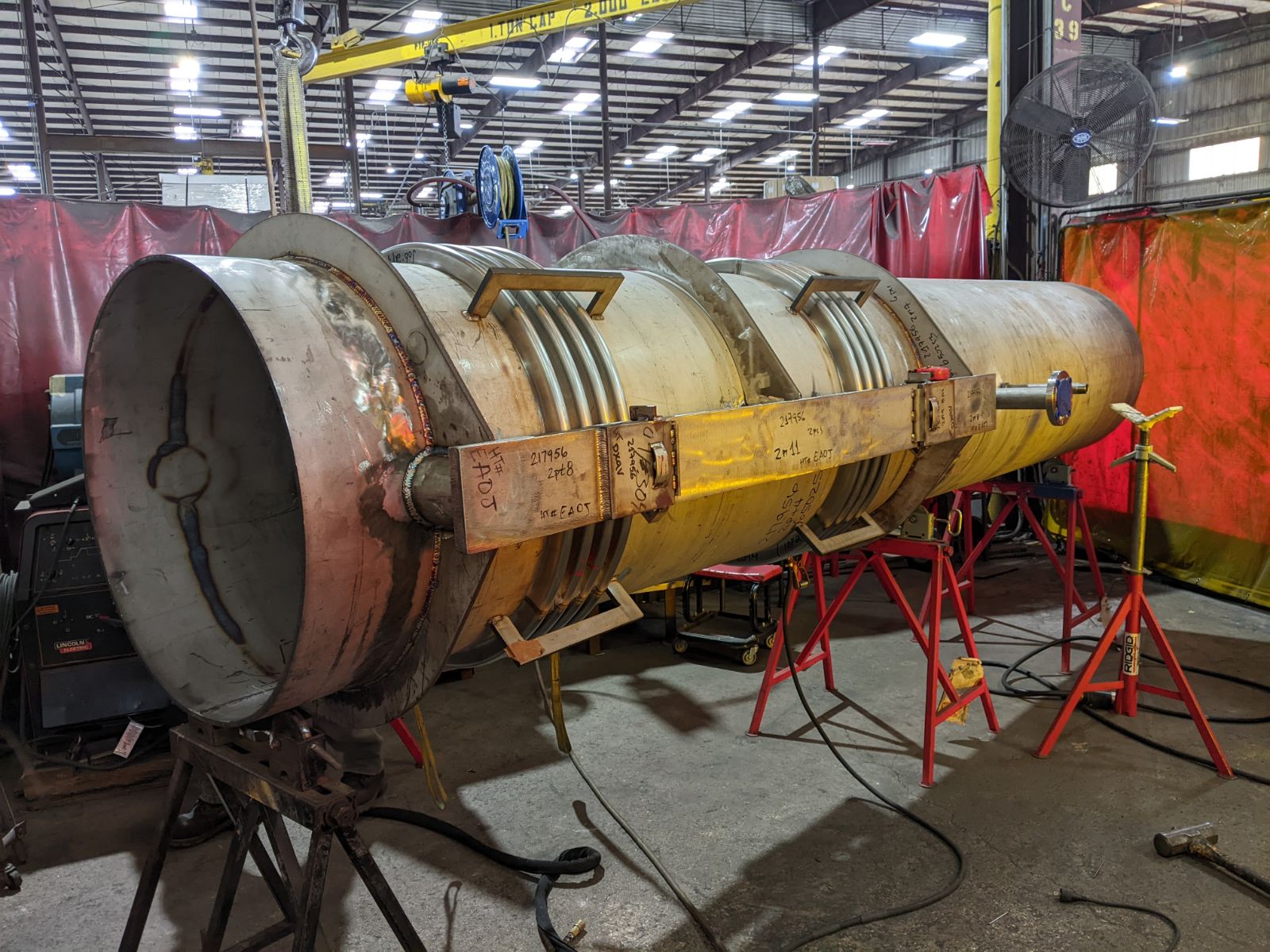
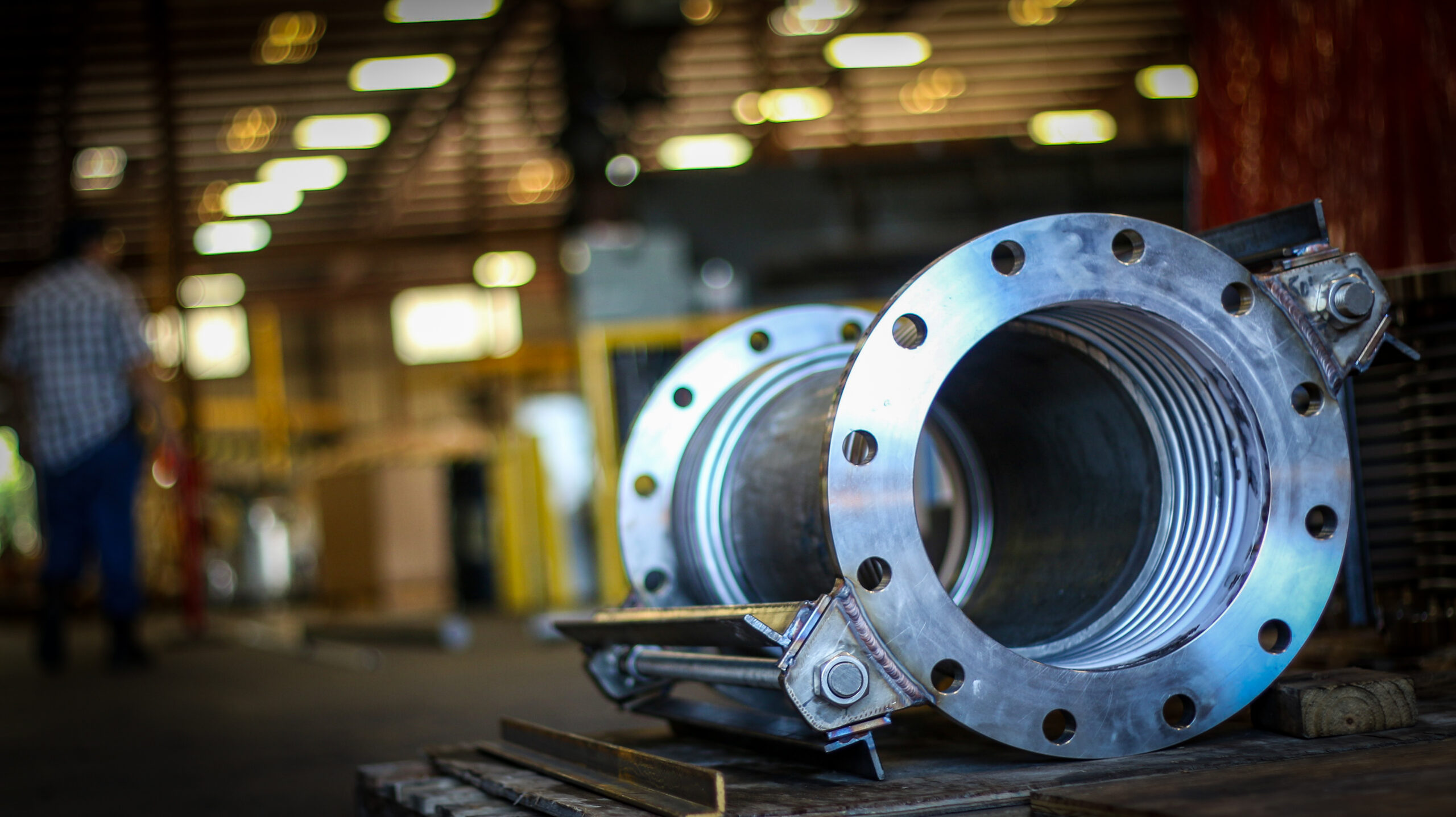
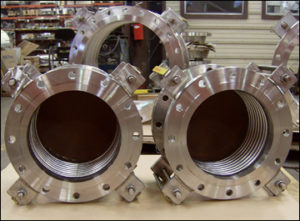
This week’s feature is on tied universal expansion joints designed for piping in a power generation plant in Texas. They are 6″ in diameter, 60″ in length, and will be used in a hot air application. The pipe, lugs and weld ends are fabricated from carbon steel, and the bellows are 321 stainless steel. The expansion joints are designed for 100°F at 3 psig and are capable of 6″ lateral movement. Each unit was 100% dye penetrant tested and soap and air tested prior to shipment.

We’re now on facebook! Like our page for a chance to win an iPad 2.

August 9th, 2011 Ray Comments off

Like usbellows new facebook page for a chance to win an iPad 2.We’re now on facebook!

Click the like button for a chance to win an iPad 2.

Our facebook fans are also…

  • the first to see the release of new products
  • included in facebook-exclusive drawings and give-aways
  • have access to the latest technical videos we have to offer
  • able to ask questions and get answers right away

Details:
- Drawing will be on Wednesday 8/31/2011 at 12 noon CDT
- Current facebook likers will be included in this drawing
- Winner will be notified by facebook message and has until Friday 9/2/2011 at 12 noon CDT to reply back with a valid mailing address to ship the iPad to (if there is no response by Friday 9/2/2011 at 12 noon CDT, an alternate winner will be selected).


Categories: Uncategorized Tags:

Axial and Lateral Movements on Universal Expansion Joints

July 18th, 2011 Ray Comments off

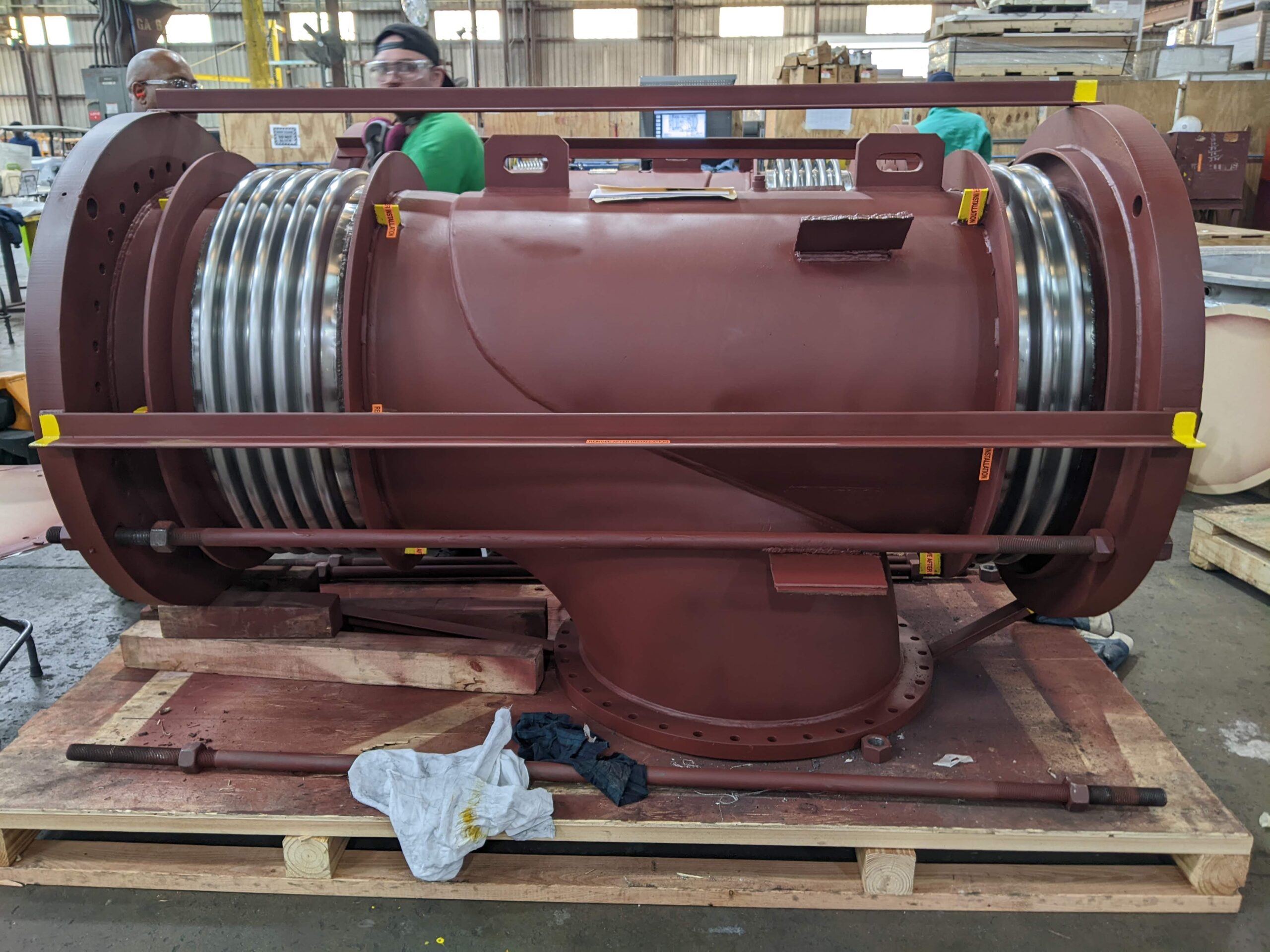
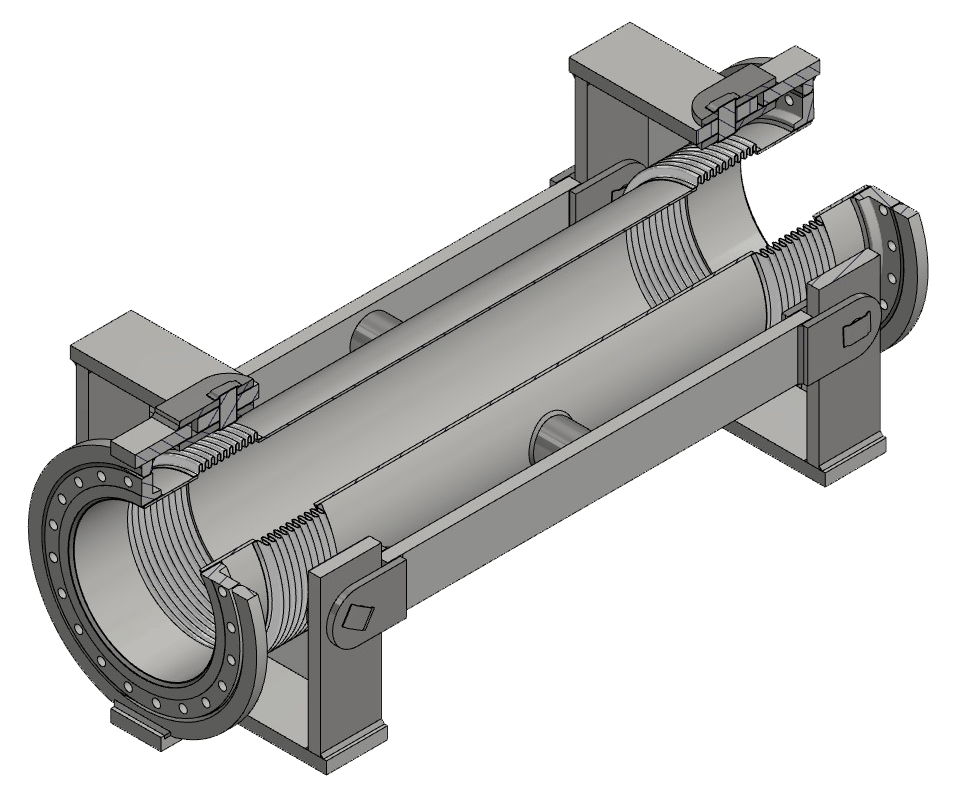
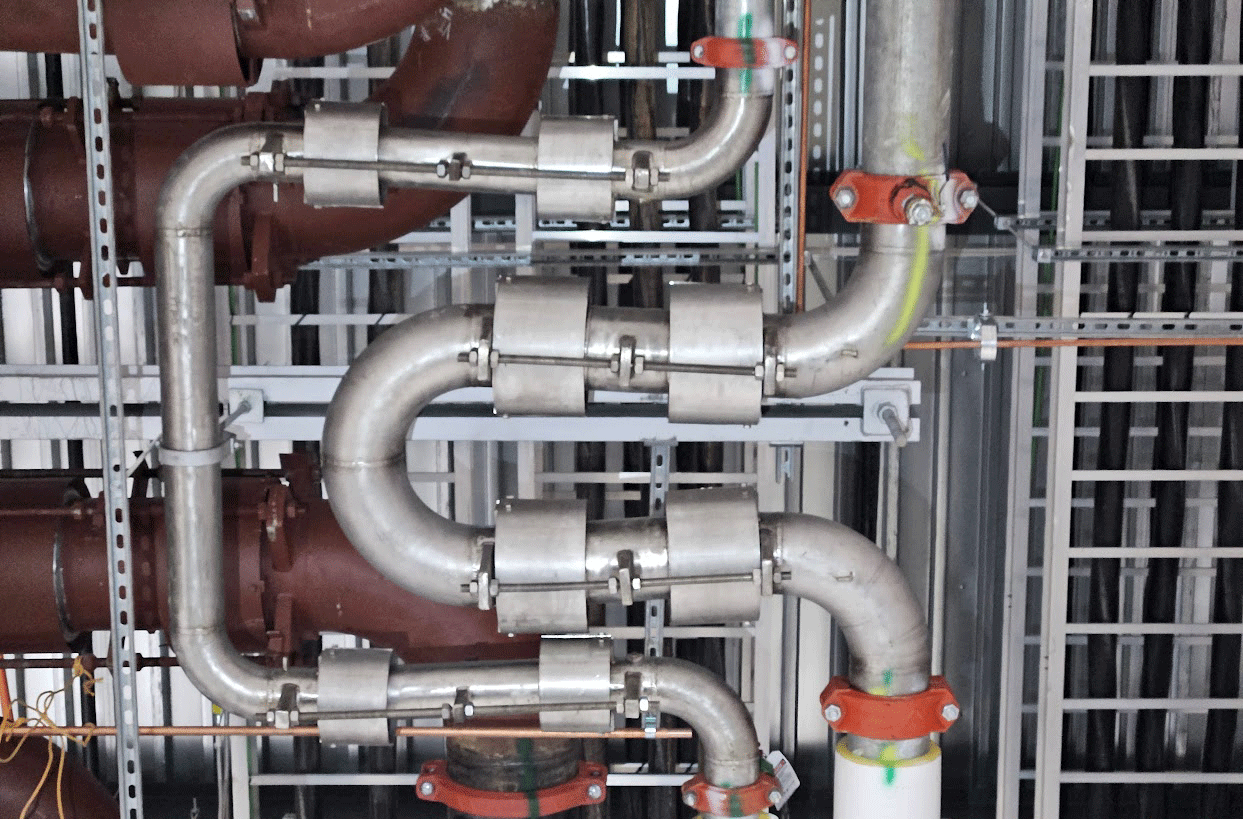
The universal expansion joint consists of two bellows separated by a pipe section or spool. The primary purpose of this arrangement is to have a unit which will accept large amounts of lateral deflection. The amount of lateral deflection they can accept is a function of the amount of angulation each bellows can absorb and the distance between the bellows. For a given bellows element, the amount of lateral deflection capability can be increased or decreased by simply changing the length of the center spool. In our Expansion Joint Catalog, three standard overall lengths are given with their lateral movement capability. If the piping problem requires greater capability, then the overall length can be increased to suit.

Universal Expansion Joint Drawing

Since deflections are the result of piping thermal expansion, and universal expansion joints are usually long, our units are designed so that the thermal expansion within the tie rods is absorbed as axial compression by the two bellows elements. In this way, the overall length of the unit does not change when the piping is in service. The standard units in our Expansion Joint Catalog have all been designed to accept the thermal expansion of their length within the tie rods when the temperature is up to the design temperature shown.

You can view some of our past universal expansion joints on our blog.

Universal expansion joints are usually supplied with tie rods. Tie rods connect the ends of the unit to each other and restrain the pressure thrust load. This unit cannot accept any externally applied axial deflections. The thermal expansion of the distance between the tie rods —within the expansion joint— will be taken by the bellows element, as described above. The tie rods usually come in sets of two or more, equally distributed around the circumference of the expansion joint. When only two are provided, 180 degrees apart, the expansion joint is free to bend, or deflect angularly, as well as laterally. With three or more tie rods, since rods are loaded equally by the pressure thrust, only lateral deflections are possible without significant forces being applied by the adjacent piping.

See more pictures of universal expansion joints in our photo gallery.

Thick-wall Expansion Joints for Large Diameter Piping Systems

July 5th, 2011 Ray Comments off

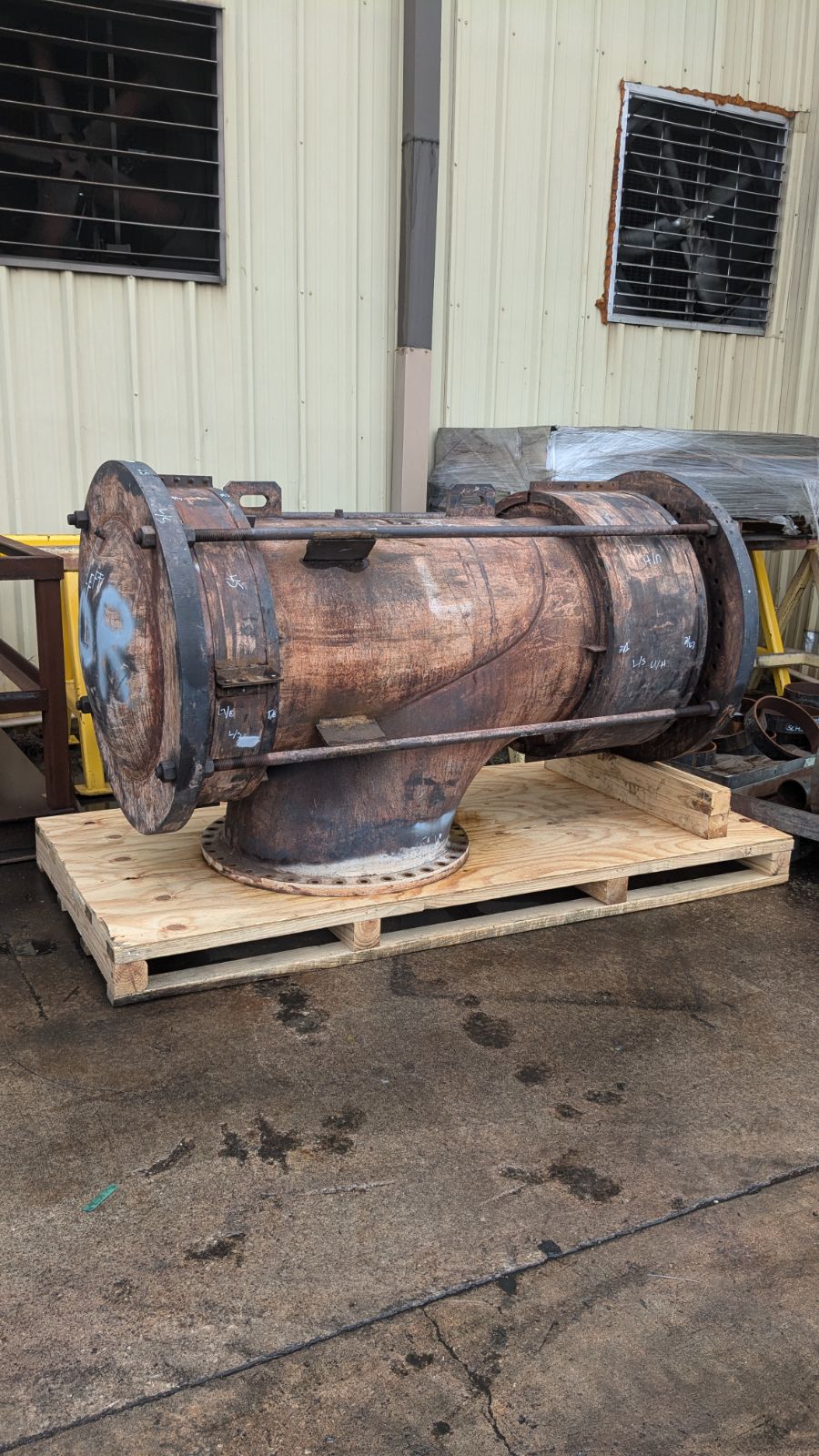
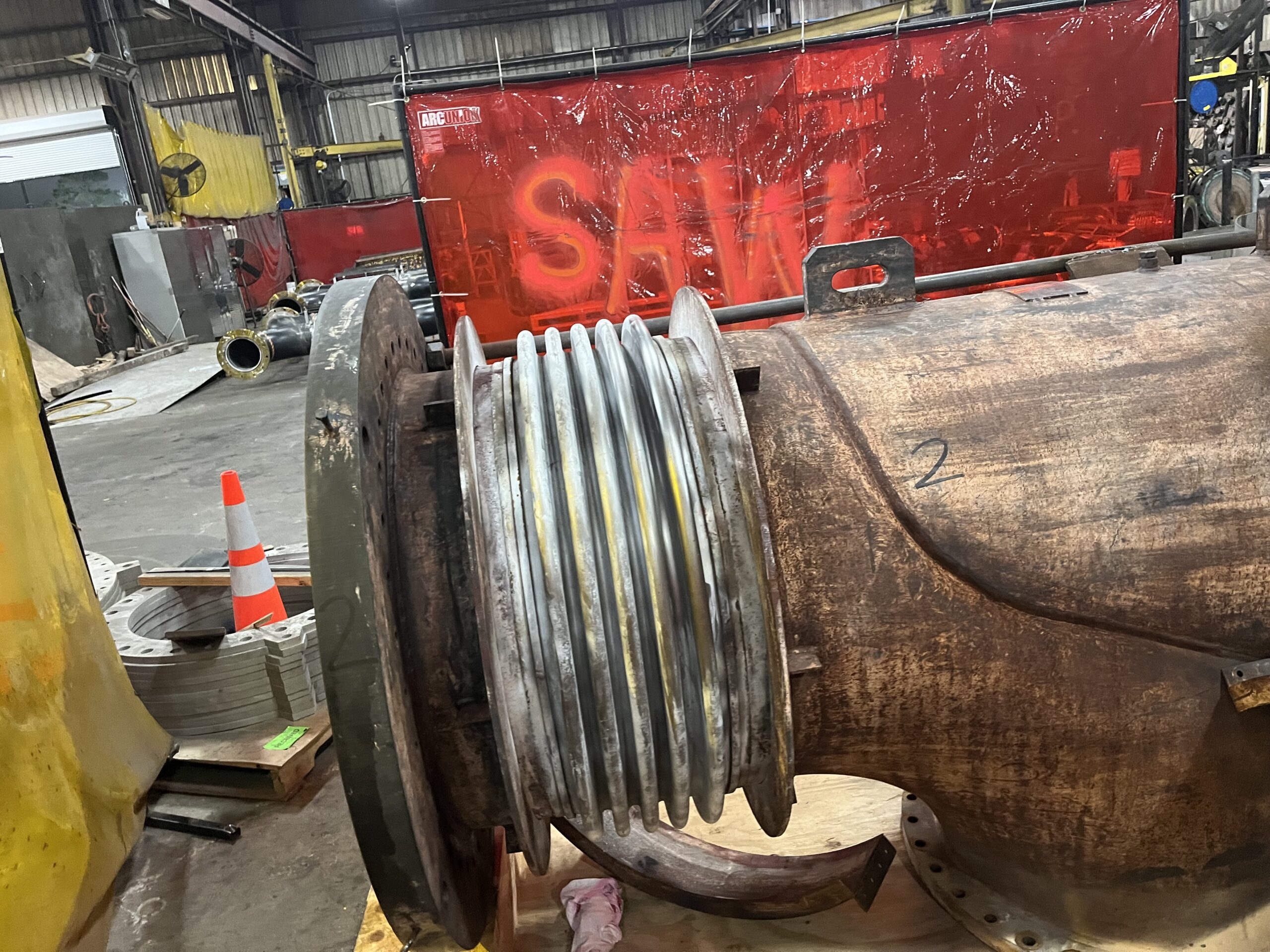
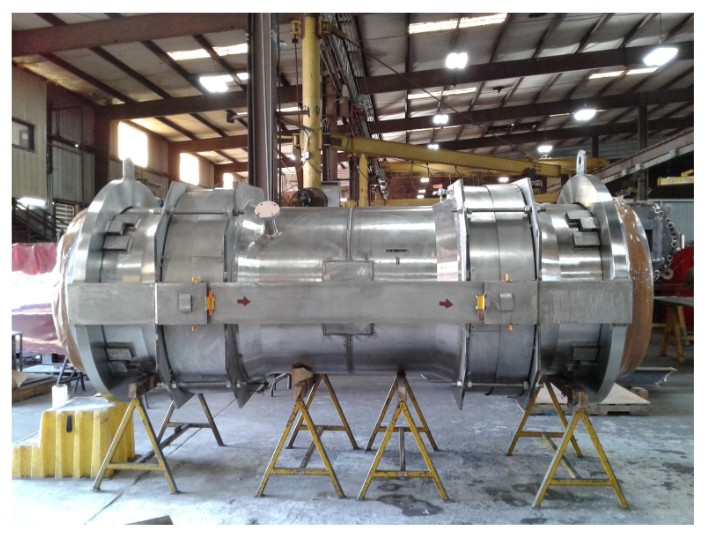
Thick-wall expansion joints may be a cost-effective option for large-diameter piping systems which operate at low pressure. Metals can be selected to satisfy different temperature conditions. The distribution of axial, angular, and lateral forces will be much higher when thick-wall expansion joints are used. We can provide your design engineers with the calculated forces and movements for proper design of the structural members supporting the system. These joints have a long life which justifies the initial investment.

72 Inch Tied Universal Thick-wall Expansion Joint with 316 Stainless Steel Bellows for a Sulfuric Acid Plant

72 Inch Tied Universal Thick-wall Expansion Joint with 316 Stainless Steel Bellows for a Sulfuric Acid Plant


90 Inch Universal Flanged and Flued Head Expansion Joint and Duct Work Assembly

90 Inch Universal Flanged and Flued Head Expansion Joint and Duct Work Assembly

Thick-wall expansion joints are used primarily in heat exchangers and large diameter piping systems where thin-wall expansion joints would not be sufficient. The bellows are typically fabricated from A516 Grade 70 material, with the thickness ranging from 3/16″ to 1″. Other materials are available to meet different temperature requirements.


108 Inch Diameter Thick Wall Expansion Joint with 2 Convolutions

108 Inch Diameter Thick Wall Expansion Joint with 2 Convolutions


Thick-wall Flanged and Flued Head Expansion Joints

Thick-wall Flanged and Flued Head Expansion Joints

Universal Rectangular Expansion Joint for a Mining Operation

June 27th, 2011 Ray Comments off

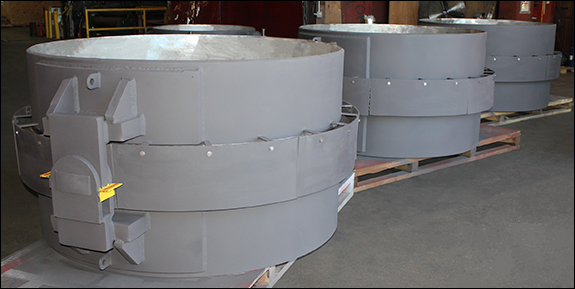
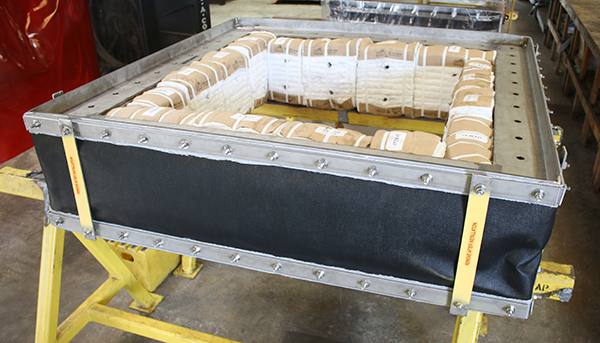
Universal Rectangular Expansion Joint for a Mining Operation

This universal rectangular expansion joint is fabricated entirely of carbon steel with COR-TEN™ steel bellows for a mining operation in the mountains of Chile. COR-TEN™ steel is high strength and ideal for resisting corrosion. It measures 73-1/4″ L x 52″ W x 96″ H, weighs 2,700 lb. and was painted with universal shop primer. This expansion joint was 100% dye penetrant tested, and a soap and air test was performed prior to shipment.

Single Expansion Joints

June 20th, 2011 Ray Comments off

The single expansion joint is simply a bellows element with end connections. Regardless of accessories, such as liners and covers, it will deflect in any direction or plane that the bellows will. It is the least expensive type, but requires that the piping be controlled as to the direction of the movements required of the unit. The expansion joint should not be expected to control the movement of the pipe. If the piping analysis shows that the expansion joint must accept axial compression, then the piping must be guided and constrained so that only that movement will occur.

This expansion joint will not resist any deflections with any force other than the resistance of the bellows, which is a function of the spring rate times the deflection amount. It is incapable of resisting the pressure thrust along its axis, which is the product of the pressure times the effective, or cross sectional, area of the bellows. Large diameter units, even with low pressures, can generate very large axial pressure thrust forces, which must be reacted by main and directional anchors. Otherwise the expansion joint will extend with disastrous results.

Projects Including Single Expansion Joints:

605 Single Expansion Joints with Rectangular Plate Flanges and Weld Ends

605 Single Expansion Joints with Rectangular Plate Flanges and Weld Ends to be Installed in a Heater for a Delayed Coker Unit in Asia


12" Single Expansion Joints

12" Single Expansion Joints with 300 lb. Raised Face Flanges, and 316L SS Bellows and Tie Rods

24" SS Expansion Joints

24" SS Expansion Joints for a Process Line Containing Exhaust Gas and Hydrocarbon Vapor


Single Flanged Expansion Joint

Single Flanged Expansion Joint with 304 SS Bellows and Carbon Steel Flanges for an Exhaust Duct Application

3" Single Expansion Joints

3" Single Expansion Joints SS Bellows Desinged for a New Epoxy Resin Plant


90 inch Universal Flanged and Flued Head Expansion Joint and Duct Work Assembly

June 13th, 2011 Ray Comments off

90 inch Universal Flanged and Flued Head Expansion Joint and Duct Work Assembly

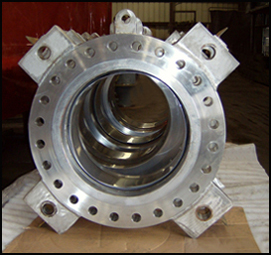
This universal flanged and flued head expansion joint and duct work assembly is designed for a 90″ diameter line. It includes slotted hinge plates installed across the bellows to carry the weight of the duct between the bellows and equalize the axial compression between the two bellows. The flanged and flued heads, duct and weld ends are fabricated from 304 H stainless steel. The expansion joint is designed for 2″ axial compression, 2-1/2″ lateral deflection, and 1150°F at 5 PSIG. A spot x-ray test, soap and air test, and 100% dye penetrant exam were performed prior to shipment.

Check out some of our recent experience with duct work and expansion joint projects

June 1st, 2011 Ray Comments off

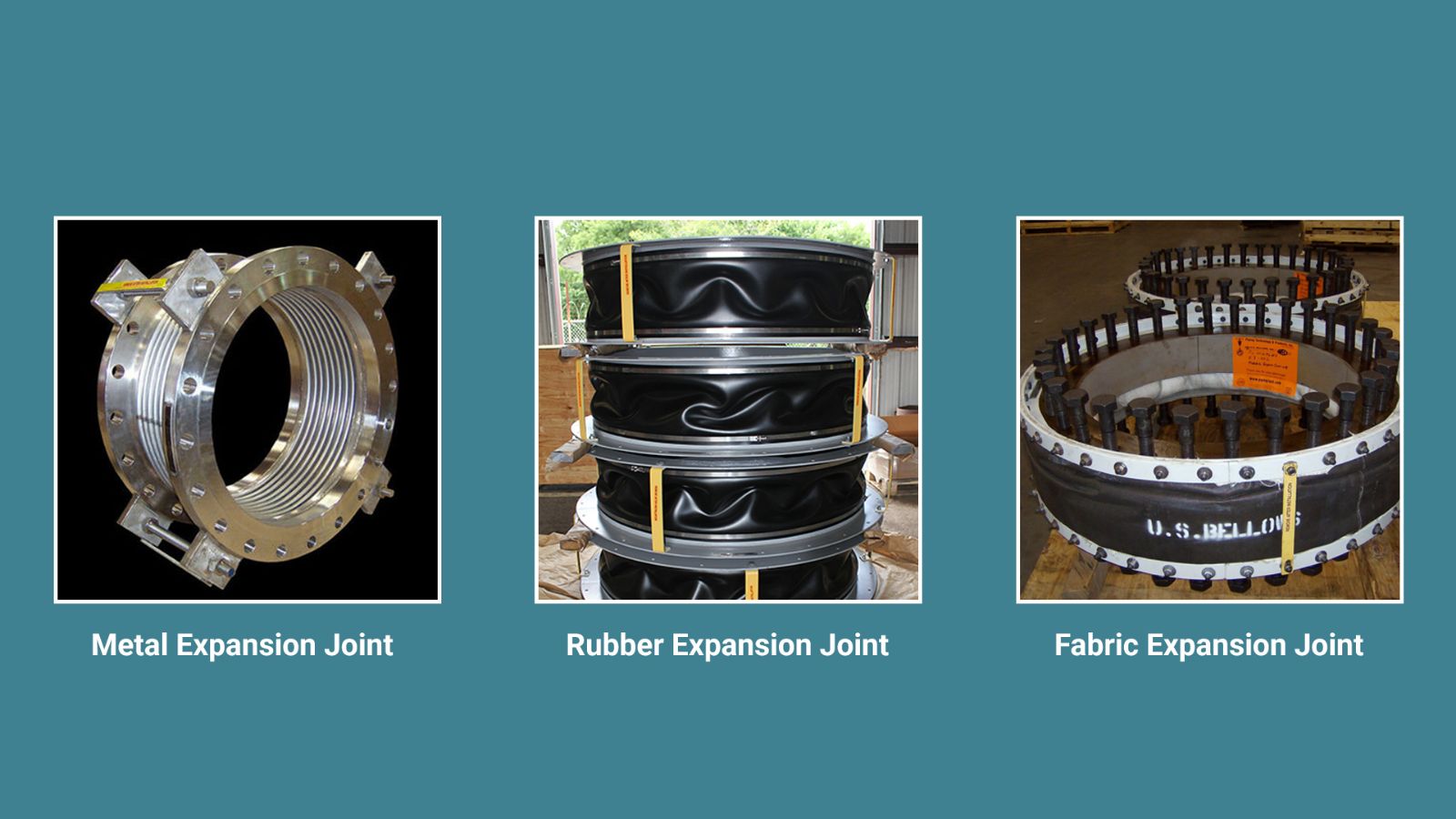
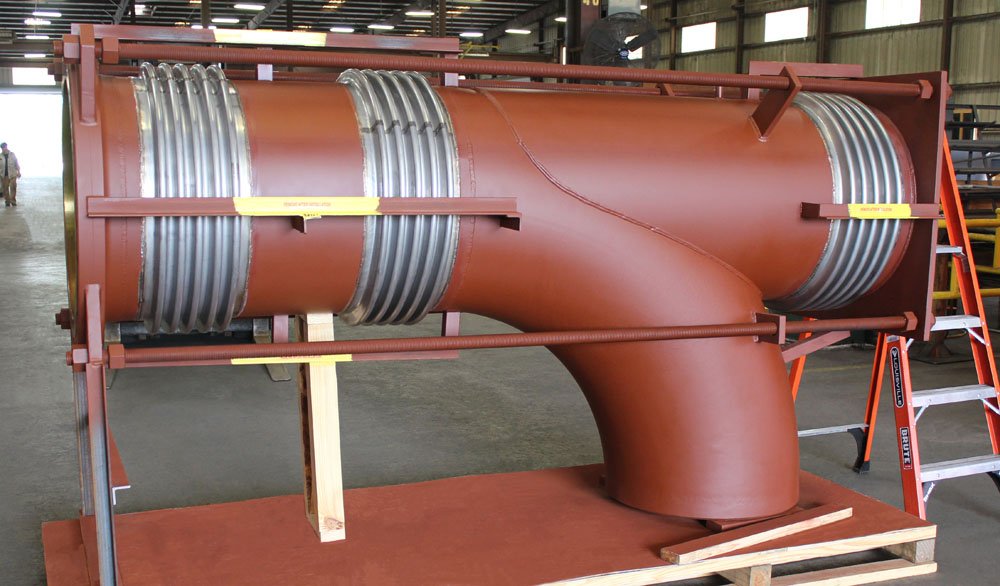
U.S. Bellows provides custom designed expansion joints in duct work and fabricated duct work assemblies. The assemblies may include fabricated elbows, tees, and straight sections of duct work, in carbon steel or stainless steel, and in diameters of 42″ or larger. The duct sections can include fabric or metallic expansion joints and can be rectangular or round. U.S. Bellows can also provide specialized pipe supports and spring hangers for large diameter duct work. Additionally, we offer complete pipe stress analysis of your duct systems using CAESAR II software.

View recent duct work and expansion joints:


Duct Work Photo Gallery

Categories: Duct Work Tags:
border

Contact Us: +1 (281) 241-9418 Toll Free: (855) 591-0906 Fax: +1 (713) 731-8640 sales@usbellows.com
Our Parent Company: Piping Technology Pipe Supports, Pipe Clamps, Pipe Hardware & Insulated Pipe Shoes
Fellow Subsidiaries: Sweco Fab: ASME Vessels, Pig Launchers, Duct Work, Strainers & Spectacle Blinds
 Pipe Shields: Pre-Insulated Pipe Supports, Slides, Guides & Anchors

Fronek Anchor/Darling
: Snubbers, Sway Struts & Sway Braces

Copyright © 2011  U.S. Bellows, Inc. All Rights Reserved. Privacy Policy