


 |
| |
[PRODUCTS]
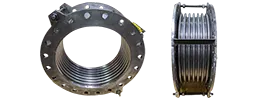
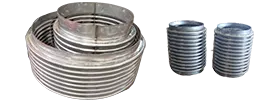
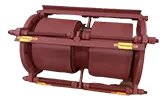
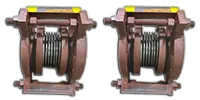
Thin-wall Metallic Expansion Joint: Hinged
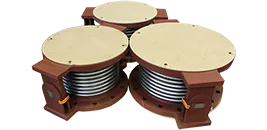
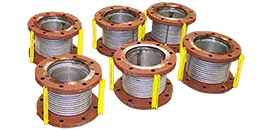
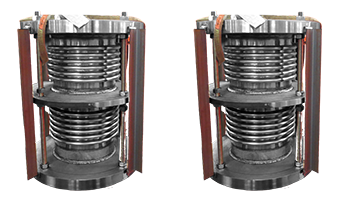
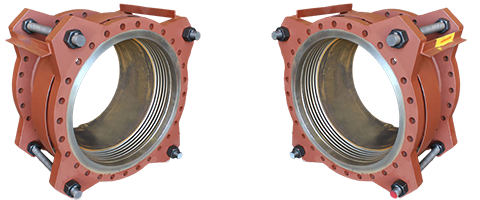
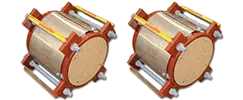
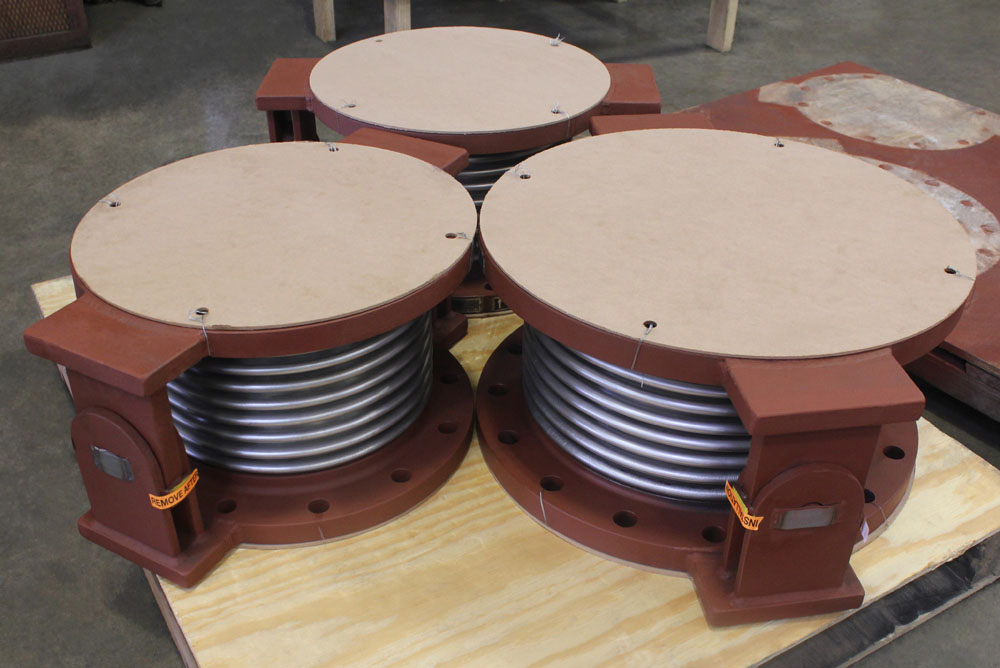
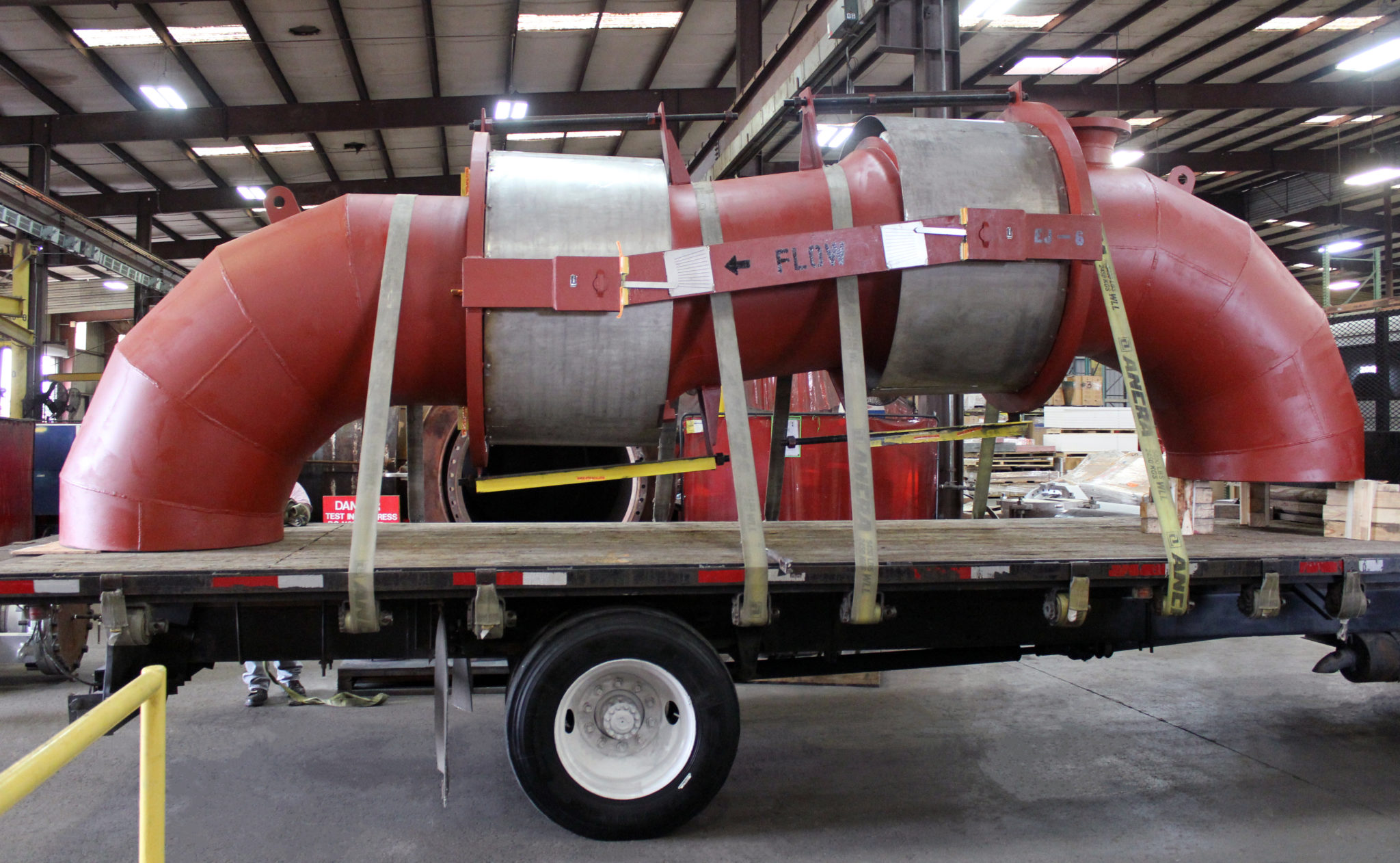
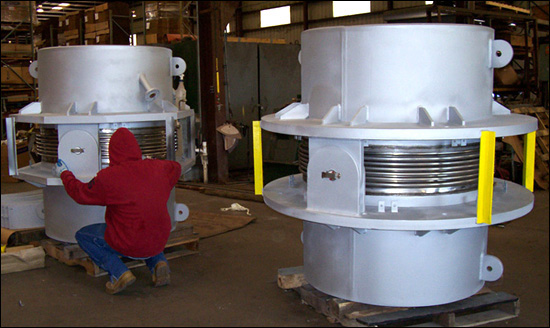
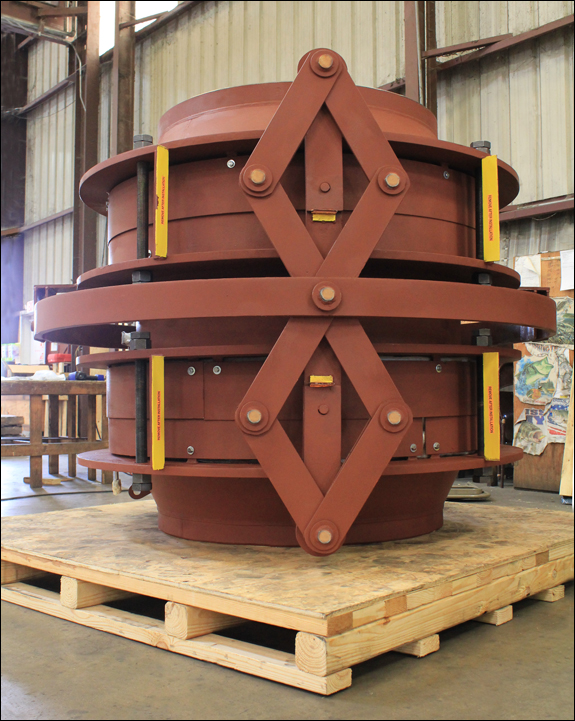
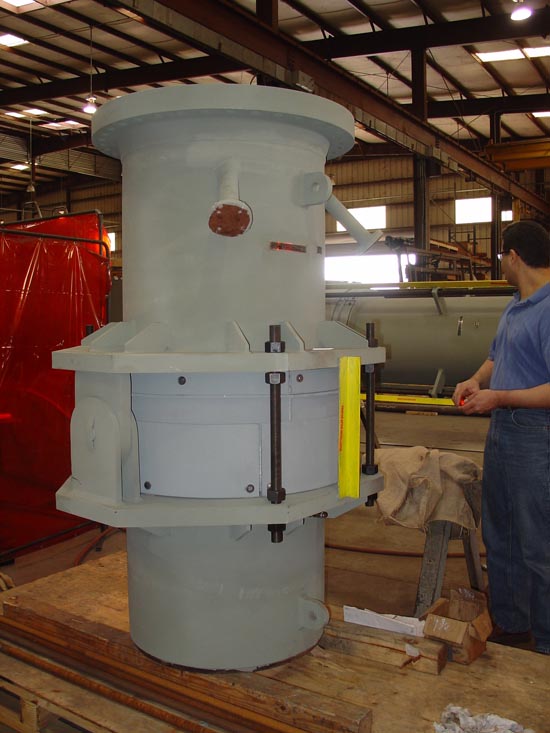
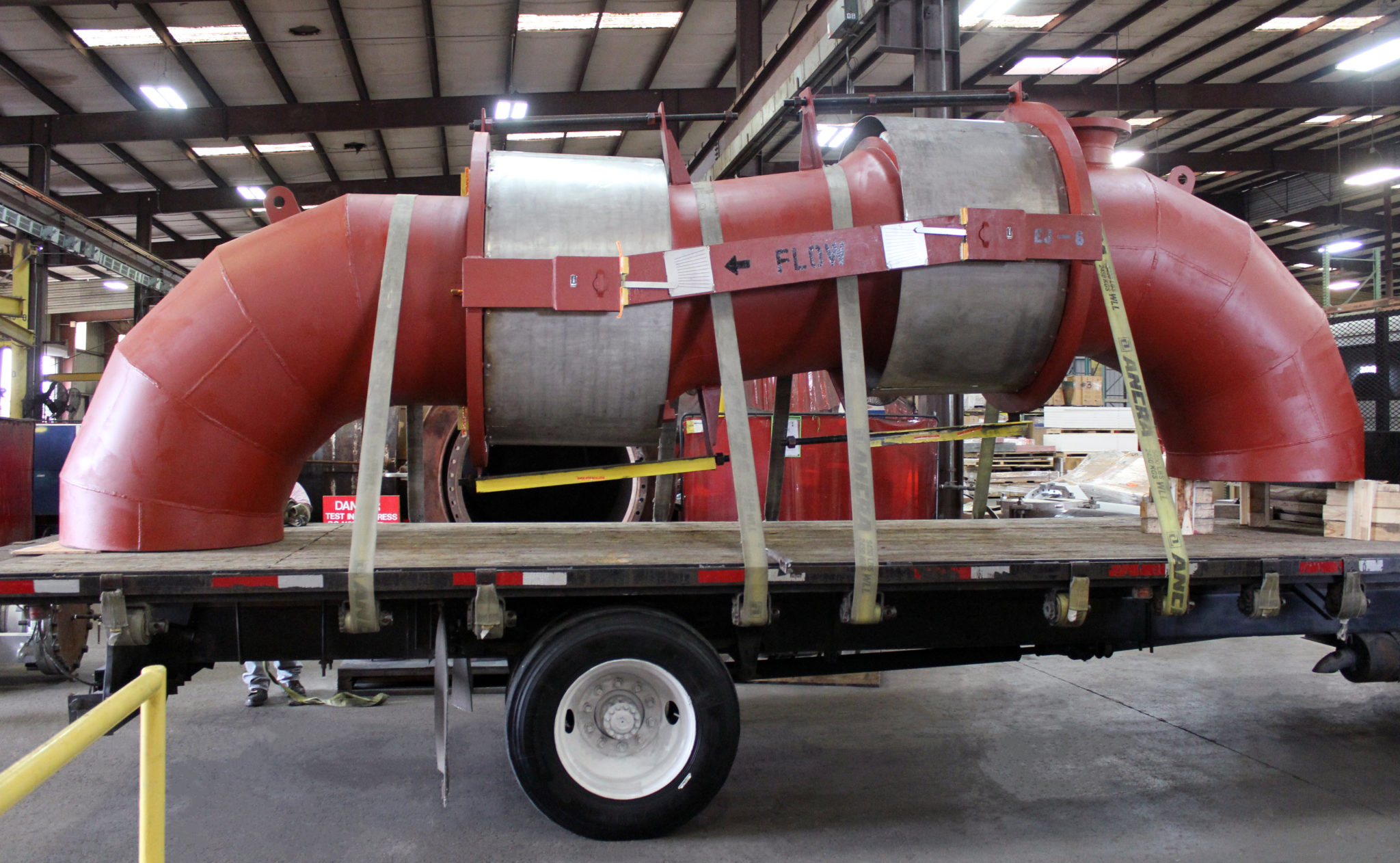
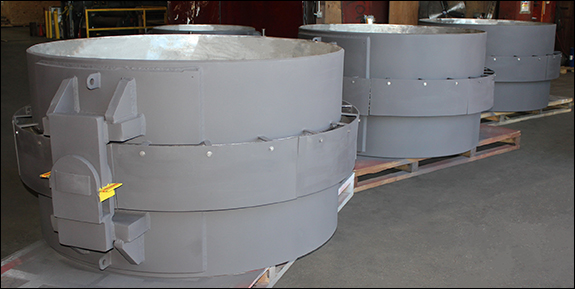
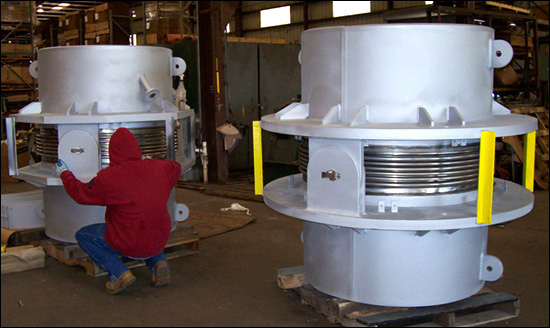
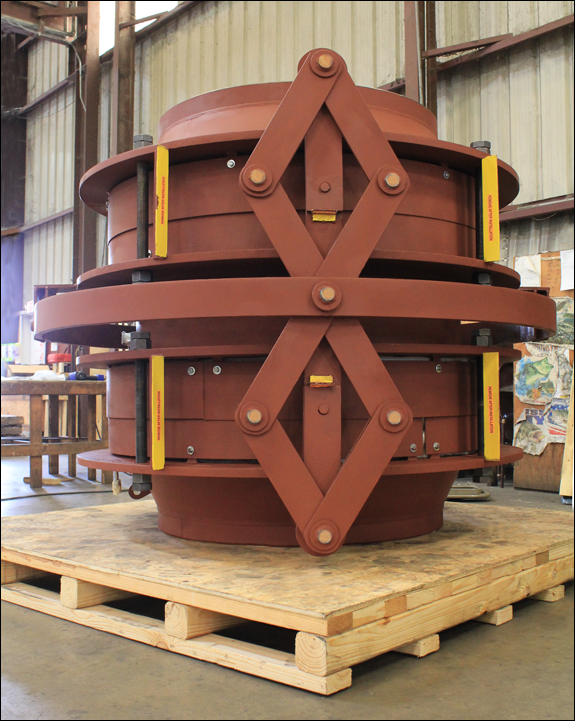
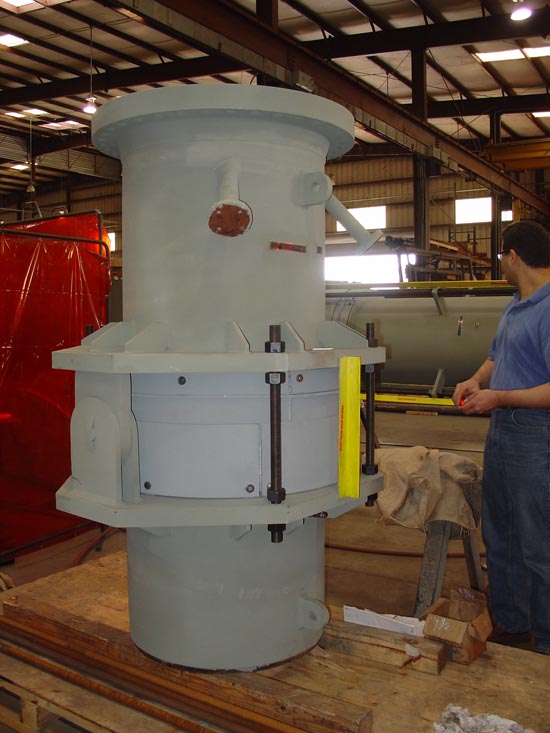
These expansion joints contain hinges or pivots which cause the unit to bend in a single plane. Normally these units are prevented by their design from deflecting axially, either in extension or compression. Their hinge mechanisms are usually designed to accept the full pressure thrust. Also, because of the hinge mechanism's design, shear loads, such as from the weight of adjacent piping, can be accepted by this expansion joint, relieving the piping designer of having to provide additional supports and anchors required by the Single type.
Some hinge types can be provided with hinge pin holes which are slotted to permit limited axial travel. These "slotted hinge" types will not resist pressure thrust forces, and anchoring must be provided. This catalog only depicts the fully restrained hinged type. If axial travel is desired, the piping designer should clearly state that the slotted hinge type is wanted in the design requirements, and he should provide for pressure thrust anchoring. On the other hand, if the full axial restraint of the hinged type is desired, the piping designer should understand that there is no allowance in the expansion joint for any axial travel, including none for any installation misalignment. |
|
Hinged Expansion Joint  |
|
| |
|
|
| |
|
|
| |
|
Features |
| |
|
|
Angular motion in all planes |
| |
|
|
Positive control over movement |
| |
|
|
Eliminates pressure thrust forces |
| |
|
|
Transmits external loads |
| |
|
|
Bolsters dead weight |
| |
|
|
Prevents torsion on bellows |
| |
|
|
No main anchors required |
| |
|
|
Minimum guiding required |
| |
|
|
Low forces on piping system |
| |
|
|
Most efficient in absorbing thermal
deflections |
|
|
|
|